


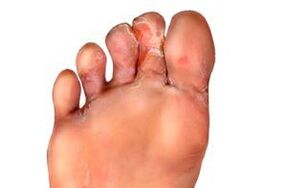
People often complain of discomfort on their legs, itching and burning.This indicates that the toes have developed mycosis or fungus between the toes.This disease is common and on average about twenty percent of people suffer from the fungus.
Mycosis appears on the skin due to improper hygiene and foot care or frequent wearing of uncomfortable shoes.If you do not notice it in time and do not immediately start treating the fungus, then the disease can become chronic.
Causes of fungus between toes
People with weakened immunity, vitamin deficiency and metabolic disorders are at risk of contracting such a disease.Also, fungus between the toes occurs due to small scratches and active sweating of the feet.After all, pathogens actively reproduce in warm conditions with high humidity.
Interdigital fungus on the feet can be picked up in a swimming pool, sauna, bath or shower (for example, in the gym, in a hotel or while visiting).Wearing tight shoes made of poor materials affects the development of mycosis on the feet.Tight shoes are especially contraindicated in warm weather for people with foot problems.
You can even become infected with interdigital mycosis simply from the shoes of a sick person.Each fungus manifests itself individually depending on the characteristics of the body.However, there are signs by which it is not so difficult to identify fungus on the feet between the toes.
Signs of fungus on the feet
- Unpleasant and painful sensations, you want to constantly scratch your feet.
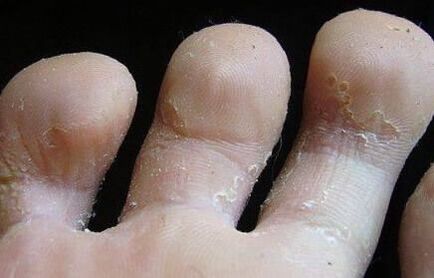
- Peeling of the skin on the legs or between the toes, turning greenish or white.
- Irritable itching, burning, severe tingling of the legs.
- Profuse sweating of the feet, unpleasant odor.
- The presence of small scratches and microtraumas on the skin.
- The skin on the feet becomes thicker, rougher, and unkempt.
- The skin between your toes may begin to split and peel off.
- Nails lose their smooth structure and spots appear on them.
The fungal process develops rapidly on the foot and may not respond to treatment.At the same time, it does not manifest itself in any way and is in the “sleep” stage.Even with constant treatment of the fungus, remission can begin suddenly and therefore you need to monitor how comfortable your feet are in the shoes and whether the sock is putting pressure on your toes.Over time, the symptoms of fungus may increase and the skin condition may worsen.It will begin to become rough, dry out and horny, and the disease will rapidly progress.
Later, the manifestation of skin fungus between the toes becomes noticeable on the nails.How does this happen?The nail thickens, changes color, flakes and falls apart.You need to see a doctor in time.Treatment of interdigital fungus begins after an acute period of the disease.
Treatment of fungus between the toes can be carried out using different methods and options.In addition to medications, use ointments and traditional medicine recipes.
We recommend that you consult a dermatologist.The doctor will tell you how to treat fungus between the toes, scrape the toe if necessary, and perform an analysis using a microscope.May prescribe treatment for fungus using medications.
Such treatment may be systemic.But this does not apply to people with a weak liver or who have certain problems with it.It is contraindicated for young children, elderly people, mothers with infants and pregnant women.What drugs are used in this case?
The doctor prescribes antimycotic medications.The treatment will benefit if you correctly follow the doctor’s recommendations and follow the instructions.
If a fungus is found between the toes, treatment cannot be delayed, as it can spread throughout the body.
You can treat fungus between your toes using traditional methods, but do this after seeing a doctor.Cases of allergies to various substances cannot be excluded; this must be taken into account during treatment.When fighting interdigital fungus on the feet, you can use folk recipes with different components.
The first option is treatment with salt and soda.These substances are found in any home and are not difficult to acquire.How to prepare the solution?Dilute a tablespoon of salt and soda in a container with warm water, place your feet there for 3 minutes.Next, rinse your feet with clean water, then put on socks soaked in wine vinegar, and sleep the whole night.Soon enough, there will be a noticeable improvement in the fight against fungus.
A recipe can help remove the fungus: add a tablespoon of ammonia to a glass of water.Before going to bed, make a compress from the resulting solution, wrap it around your foot, putting on a plastic bag and a sock on top.Moisten a piece of soft cloth in this solution and wrap the foot with the fungus in it.Repeat no more than ten times.
Treatment with tar.Steam your feet in soapy water and remove peeling skin with a piece of pumice.Wipe with a towel, apply tar on the foot: skin, nails, interdigital areas, wounds.Do not wash off the tar for an hour and a half, and do not wash your feet for a couple of days.Repeat five times.
Cut a few peeled cloves of garlic into large pieces and dip in salt.Rub the area with the fungus with this, but gently, without being overzealous.You can chop the garlic, mix with salt and apply to the affected area.
Another folk recipe for treatment.Celandine oil from a pharmacy is suitable as a drug for the treatment of interdigital fungus.Twice a day, steam your feet in hot water mixed with soda, then coat your fingers and nails with oil.Repeat for a month.
Treatment of interdigital mycosis
Soda, chamomile, a compress of a mixture of nettle and coltsfoot, foot baths in salt water, talc (reduces sweating) - all these are ideal and acceptable methods for treating mycosis on the legs.
When progress is made in treating the fungus, when the symptoms stop bothering you, it’s time to start a new round of treatment - consolidating the result.The treatment will give positive results if you constantly remove the callous skin on the leg.
This is where fungal spores hide, causing a new infection and increasing the period of time required for healing.To do this correctly, you need to soak the skin of your feet and gently rub the areas with dead skin with a brush, which will help it peel off.
After finishing, wash the brush well.If you do nothing about the existing fungus, there is a high probability that it will spread to your nails.This is fraught with growths that change their color and thickening appears on the nails.The fungus between the toes peels off the skin, causing cracks that cause pain.
If you start treating the fungus correctly, the results will not be long in coming.For healthy skin on your legs, do not forget about the impact of preventing this disease.It is better to initially resort to simple but proven measures than to find out how to cure fungus.
Prevention of fungus between fingers
Prevention will include maintaining good health - maintaining a healthy diet, stimulating the immune system, and taking vitamins.
It is worth checking relatives for the presence of fungus.Familial infection is common among infected people.Pay attention to your shoes - treat them with anti-fungal spray.
Using someone else's shoes is unnecessary.Try not to use other people's shoes and towels at all - this is basic hygiene that can prevent problems and consequences.
In addition to prohibiting the use of other people's personal hygiene items, you should also not give your towels, nail files, nail scissors, or foot brushes to anyone.
When visiting a swimming pool or sauna, take replacement shoes with you or buy disposable ones, because in such places you can pick up fungus.And after water procedures, wipe your feet, between your toes, and do not rush to put on your shoes - wait until they dry completely.
Change your socks (also stockings, tights, etc.) every day so that they are made from natural materials.
In hot weather, wear open-toed shoes so that the skin on your feet can be ventilated.You can prevent fungus between your toes by using antifungal ointment.Feet should be clean and dry when applied.
Once every two months it is necessary to do a pedicure, completely removing dead skin that may contain fungus.This is best done in salons with a good level of equipment disinfection.This will help fix the cured fungus
The fungus does not tolerate prolonged high temperatures, even five minutes of boiling.It also does not tolerate chemicals with chlorine - this must be taken into account when processing bed linen and personal hygiene products.